

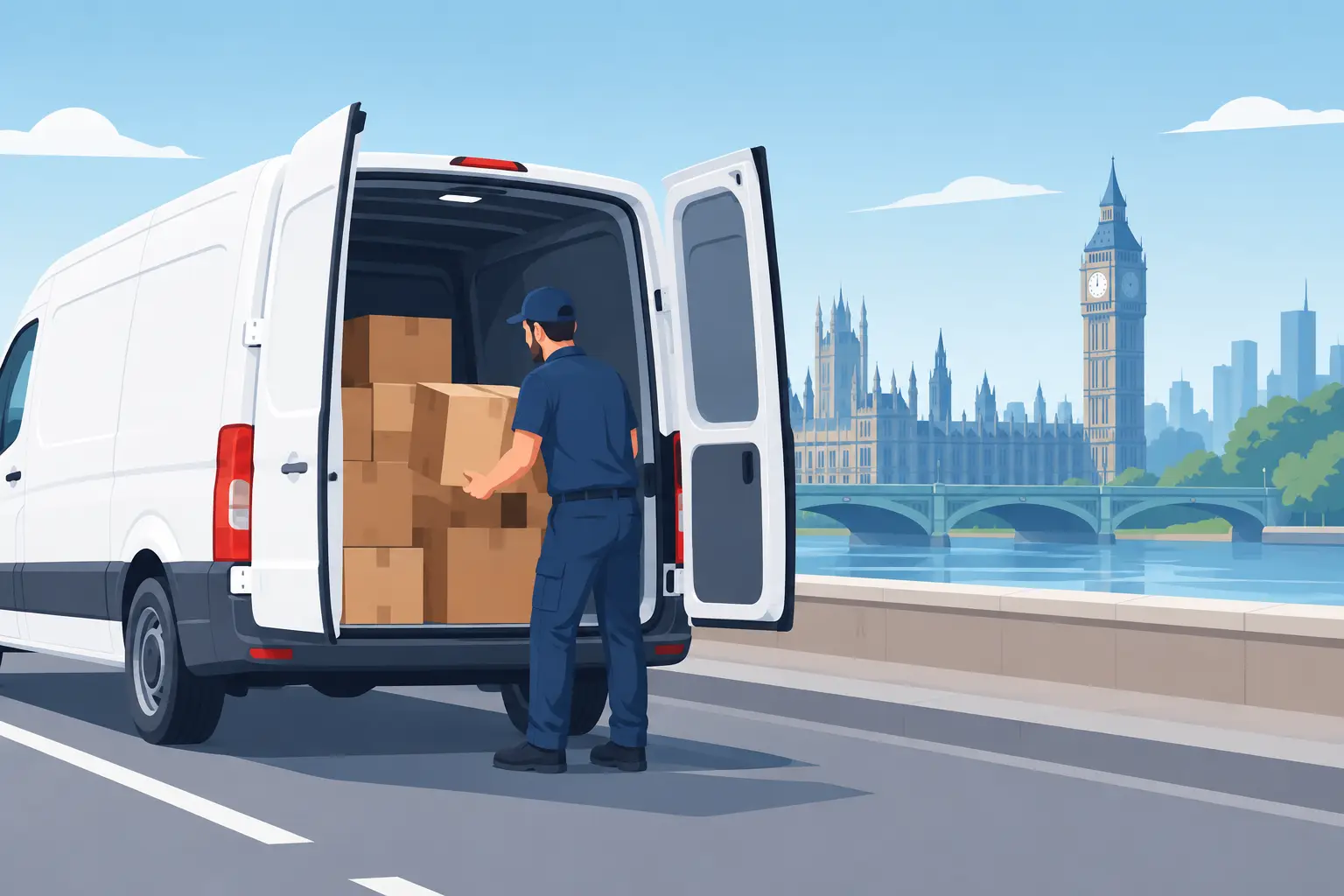
A customer’s kitchen units, a day’s parcel deliveries or stock collected from a supplier can all be worth far more than the van carrying them. This goods in transit guide explains when cover may help if those items are stolen, damaged or lost while you are working - and where a standard van insurance policy may leave a gap.
For tradespeople, couriers and small businesses, the right protection is not about adding every available extra. It is about protecting the items you are responsible for, at a level that makes commercial sense. If a loss would leave you out of pocket, unable to complete a job or facing an unhappy client, goods in transit cover is worth considering.
What is goods in transit insurance?
Goods in transit insurance, often called GIT cover, protects goods or cargo being carried in connection with your work. Depending on the policy, it can cover items you own, items you have sold or stock belonging to a customer while they are in your care.
The policy is designed for the journey itself and may apply while goods are being loaded, transported and unloaded. Cover can be useful following theft from the van, accidental damage in a collision, or loss during a delivery. The exact events covered, limits and exclusions differ between insurers, so the policy wording matters.
This is separate from the insurance that covers your van. Comprehensive van insurance may repair or replace the vehicle after an insured incident, but it does not automatically mean the load inside is protected. Equally, a public liability policy can help where your work causes injury or property damage to another person, but it is not a replacement for cover on the goods you are carrying.
Who should consider goods in transit cover?
The answer depends on what is in your van and who owns it. A self-employed builder transporting paid-for materials to site, a florist making wedding deliveries and a furniture retailer delivering orders all have a clear exposure. So do courier drivers carrying parcels that belong to a delivery company or its customers.
You may need GIT cover if you regularly carry:
- customer orders, retail stock or business equipment for delivery
- materials bought for a specific job
- goods collected from wholesalers or suppliers
- parcels, documents or consignments for a courier or haulage contract
- property belonging to customers that you are moving, repairing or returning
Private use is different. If you occasionally carry your own belongings, such as furniture during a house move or equipment for a hobby, goods in transit insurance may not be necessary. Your home contents policy, personal possessions cover or a specialist policy could be more relevant. Always check rather than assume, particularly where high-value items are involved.
Tools are not always goods in transit
This is a common source of confusion. A plumber’s drills, a carpenter’s saws and a decorator’s sprayer are the tools used to do the job. They may need dedicated tool insurance, whether they are stored overnight in the van or carried from one job to another.
Goods in transit cover is more likely to relate to the boiler, flooring, appliances or materials being delivered or carried for a customer. Some policies can be extended to include tools, but this is not automatic. If tools are central to your livelihood, ask specifically whether they are insured, what the single-item limit is and whether theft from an unattended van is included.
What can a policy cover?
A suitable policy may insure the value of goods against events such as theft, fire, collision, overturning and accidental damage. It may also cover goods while temporarily left in the vehicle during a working day, subject to security conditions.
However, insurance is not a promise to pay for every mishap. Wear and tear, poor packing, gradual deterioration, faulty workmanship and unexplained shortages are commonly excluded. Perishable items, cash, jewellery, hazardous goods, refrigerated loads and fragile items can have special conditions or may require specialist cover.
The level of protection also matters. Some policies pay only where you are legally liable for the loss. Others insure the goods more broadly, subject to the terms and the declared value. A courier carrying hundreds of individual parcels may need a different arrangement from a joiner delivering materials for one installation.
Carrier liability deserves particular care. Your contract with a courier firm, customer or supplier may make you responsible for goods up to a stated amount. That contractual requirement may be higher than the basic limit in your insurance. Before accepting regular delivery work, compare the required limit with the cover available, rather than finding out after a claim.
Choosing the right cover limit
Start with the maximum value of goods you are likely to carry at one time, not the average day. If you usually have £2,000 of stock in the van but occasionally collect £10,000 of materials, a £2,000 limit could leave a large shortfall on the day it matters most.
Also check whether the limit applies per vehicle, per claim, per item or across the whole policy year. A low single-item limit can be a problem where you transport one expensive appliance, machine or piece of furniture. If you run several vans, establish whether each vehicle has its own limit or whether drivers share one overall amount.
It can be tempting to choose the highest available limit, but that can increase the premium unnecessarily. The better approach is to declare realistic values and choose cover that reflects your actual contracts, stock levels and routes. Paying only for the cover you need is sensible, provided the limit would still protect your business after a serious loss.
Security conditions can decide a claim
Insurers expect you to take reasonable steps to protect the load. Exact requirements vary, but vehicle security often has a direct effect on both price and cover. An alarm, immobiliser, deadlocks, a secure loading area and lockable tool storage can all help reduce theft risk.
Read the unattended-vehicle conditions carefully. A policy may require doors and windows to be locked, keys removed and goods kept out of sight. It may state that the van must be parked on a driveway, in a locked compound or at a secure location overnight. Some policies do not cover goods left in the van between jobs or after a defined time.
Loading habits matter too. Secure goods properly, keep delivery paperwork organised and avoid leaving the van unattended with doors open. If a claim arises, photographs, invoices, delivery notes and proof of ownership can make the process much easier.
Questions to ask before you buy
A quick quotation works best when you can explain precisely what you carry and how you use the van. When completing your online quote, state whether you transport your own stock, customer-owned goods, building materials, parcels or a mixture. Mention the largest load value, usual delivery area, where the van is kept overnight and whether you employ other drivers.
It is also worth asking whether loading and unloading are included, whether cover applies across the UK only or extends into Europe, and what excess you would pay if you claimed. If your work involves multiple drops, confirm that the policy suits that pattern rather than assuming a single-delivery arrangement will do.
Do not rely on a customer saying their goods are insured. Their policy may protect them, but it may not remove your contractual responsibility or prevent a dispute if something goes wrong. Clear paperwork and the right insurance can protect both sides.
If goods are stolen or damaged
Act promptly. Where theft or malicious damage is involved, report it to the police and obtain a crime reference number. Tell your insurer or broker as soon as possible, then retain damaged items, photographs, invoices, delivery records and any correspondence with the customer.
Avoid admitting liability or agreeing to reimburse a customer before you have spoken to the insurer, unless immediate action is needed to prevent further loss. Give a clear account of what happened, including where the van was parked, how it was secured and the value of the items involved. A well-kept record of collections and deliveries is useful long before a claim is needed.
The right cover should fit the way your van earns its keep, whether you make occasional local deliveries or spend every day on multi-drop work. Use our easy-to-use online comparison service to enter your details, compare available quotes and check the policy terms before choosing your cover.